G is for Greene


20130407-082001.jpg

Henry Graham Greene was born in 1904 in Hertfordshire, England. Born into an affluent and well-respected Brewery family, he was diagnosed with depression at just 16 years old. He produced his first work, a collection of poems at the age of 21 and after graduating from Oxford turned to journalism.

His first novel was published when he was 25 but it wasn’t until 3 years later when he published “Stamboul Train” (which was adapted into the film The Orient Express) that he began to receive mass recognition.

During WWII he worked for MI6 and many of the characters and situations he encountered ended up in his novels, but he was also fascinated with religion and the battle of good against evil, which is a reoccurring theme running through many of his novels. He kept a journal by the side of his bed where he wrote down his dreams.

Throughout his lifetime he suffered from Bipolar but produced 27 novels, some collections of short stories, autobiographies and travel writing. In his later years he moved to Switzerland, where he died at the age of 86 from Leukaemia

My favourite Graham Greene quotes:

“Writing is a form of therapy; sometimes I wonder how all those who do not write, compose or paint, can manage to escape the madness, melancholia, the panic and fear which is inherent in a human situation.”

“The great advantage of being a writer is that you can spy on people. You’re there, listening to every word, but part of you is observing. Everything is useful to a writer, you see every scrap, even the most longest and boring of luncheon parties.”

“My two fingers on a typewriter have never connected with my brain. My hand on a pen does. A fountain pen, of course. Ball point pens are only good for filling out forms on planes.”

“A petty reason perhaps why novelists more and more try to keep a distance from journalists is that novelists are trying to write the truth and journalists are trying to write fiction.”

And if you haven’t seen this version of Brighton Rock….you really should!

I’m really showing myself up here aren’t I? Again, I haven’t read any Greene, but again, because I feel that I know his work so well from the film and TV adaptations. I know the story of Brighton Rock, The Ministry of Fear, The Third Man, The End Of The Affair, The Quiet American, Our Man in Havana and The Comedians. I have at least 2 of his other novels on my “Mount Toobie” and even one of his travel biographies *blush*

There are just so many books, and not enough days in my life 😦 I can see The Hubster rolling his eyes and thinking “Oh no, she’s not gunna buy more books!” Lol. I think my A-Z subject matter was a bad choice *snigger*

I love the fact that Greene preferred writing with a fountain pen. It’s definitely my preference as a writing implement, and so far away from Capote, who used to write in pencil. Shakespeare must of written with a Quill, so I’m glad we’ve moved on a bit lol.

What’s your favourite writing tool?

F is for Forster


20130404-223329.jpg

Edward Morgan Forster was born in 1879 in London and at the age of 8 inherited a large sum of money (nearly £700,000 at todays rates) from an aunt. This enabled him to attend University and pursue his dream of being a writer.

The first of the 5 novels he completed (Where Angels Fear To Tread; The Longest Journey; A Room With A View; Howards End; A Passage to India; Maurice) was published when he was 26, but he was still working up until his death at the age of 91, leaving an unfinished manuscript (Arctic Summer). His biggest success was with the novel “A Passage To India” which stemmed from his love of the country, which he first visited after he left University. He returned again to India in the early 1920’s and in the 30’s and 40’s he was a well-known broadcaster on BBC Radio.

His novels and numerous short stories remain popular today and generally deal with class differences but also with elements of sexuality and symbolism.

My favourite E M Forster quotes:

“One always seems to overpraise a long book, because one has got through it.”

“Only a writer who has the sense of evil can make goodness readable.”

“I have only got down onto paper, really, three types of people: the person I think I am, the people who irritate me, and the people I’d like to be.”

“The king died then the queen died is a story. The king died, then the queen died of grief, is a plot.”

Forster was a “pantster” and liked his writing to happen, rather than approach it planned. “How do I know what I think unless I see what I say?”

I am again, ashamed to say that this is yet another author, who’s work I haven’t read (although I do have a copy of Maurice on my huge pile of books in the bedroom), but I have at least seen the film adaptation of A Room With A View lol. I found it interesting what Forster says about a large book. I personally just tend to avoid anything that has over 350 pages!

Are you a fan of huge tomes? Or do you avoid them like I do? 😉

E is for Eco


20130403-143721.jpg

Umberto Eco was born in 1932 in Alessandria in Northern Italy. He is the first of the writers I’ve looked into who is actually still alive! Lol. Urged by his father to become a Lawyer, Umberto instead chose to go to University to study medieval philosophy and literature and subsequently became a University Professor. Now, he divides his time between studying semiotics, writing essays, philosophy, literary criticism and writing fiction.

He has written books for children, dozens of non fiction books and 6 novels. But his most famous work was his first fictional novel “In The Name Of The Rose” which was published when he was 48 years old. A historical murder mystery set in a monastery it encapsulates everything that Eco had studied and taught about in the previous years and has sold approximately 50 million copies.

The intricate plots of his fiction are full of references to literature and history. He sites Jorge Luis Borges and James Joyce as his influences. He currently lives in Italy, dividing his time between two homes. In one he has a library of 30,000 books and in the other, 20,000 (and I thought I was bad!!!!).

My Favourite Eco Quotes:

“The real hero is always the hero by mistake; he dreams of being an honest coward like everybody else.”

“It is a myth of publishers that people want to read easy things.”

“Every time I write a novel I am convinced for at least 2 years that it is the last one, because a novel is like a child. It takes 2 years after its birth. You have to take care of it. It starts walking and then speaking.”

“I love the smell of book ink in the morning.”

“Thus I rediscovered what writers have always known (and have told us again and again): books always speak of other books, and every story tells a story that has already been told.”

Check out Umberto Eco’s Rules Of Writing and this rather wonderful interview about his most recent novel.

Ive never read any of Eco’s work (although The Hubster has) and I don’t tend to read books that have an intricate plot structure. So does that mean I choose books that are easy to read? I probably do you know *blush*

What do you think? Do readers want to read easy things? Do you?

D is for Dickens


20130331-221805.jpg

Charles Dickens was born in 1812 in Portsmouth England and is regarded as the greatest novelist of the 19th Century. During his lifetime he wrote 16 novels (one remained unfinished) and numerous collections of short stories. He suffered from severe insomnia and is widely regarded as a genius, his novels remaining popular today.

Dickens first found success with “Sketches by Boz”, which were weekly pieces published when he was just 24 years old. From there he was approached by a publisher and the rest, as they say is history.

Often described as the greatest creator of characters since Shakespeare, they were often based on people he met as he walked the streets of London. The settings for his novels were also based on real places, and many still exist today (especially in Rochester where I live…lucky me!).

He wrote extensively about London, appalled at the conditions the lower classes were subjected to and campaigned for social reforms. He died of a stroke in 1870 (just up the road from me) at the age of 58.

My favourite Dickens Quotes:

“An idea, like a ghost, must be spoken to a little before t will explain itself.”

“Be natural my children. For the writer that is natural has fulfilled all the rules of art.”

“My advice is to never do tomorrow what you can do today. Procrastination is the thief of time.”

“The whole difference between construction and creation is exactly this: that a thing constructed can only be loved after it is constructed; but a thing created is loved before it exists.”

“I never could have done what I have done without the habits of punctuality, order, and diligence, without the determination to concentrate myself on one subject at a time.”

Here’s a great video from a fellow Wrimo who went to visit the churchyard that inspired Great Expectations….one day I will do something like this 🙂

Dickens used his fiction as a springboard to highlight social abuse and deprivation in Victorian society, bringing the subject to the attention of the reading public. It’s generally believed that many of the reforms that were made during that period are down to Dickens influence. This got me thinking about how, as authors, it is easy to sound off about what we think is right and wrong about our societies, in a work of fiction. Personally, its not something I’ve ever done, consciously….yet, but an interesting concept that i’d like to explore…. Have you ever based one of your stories on a social problem you’d like highlighted?

C is for Capote


20130331-134045.jpg

Truman Capote was born in New Orleans in 1924 and is best known for his novel Breakfast at Tiffany’s and “nonfiction novel” In Cold Blood.

He taught himself how to read and write and having discovered his passion for writing when he was 11, spent the rest of his childhood honing his craft. He started by writing short stories, the first of which was published when he was 21.

A close friend of Harper Lee’s, both Capote and Lee have characters based on each other feature in their work and Lee worked along side Capote as he researched In Cold Blood.

Capote embraced being a celebrity and would seek out the company of authors, critics, business tycoons and Hollywood A listers. But, after years of drug and alcohol dependency, rehab clinics and break downs he died of liver cancer at the age of 59.

My Favourite Truman Capote Quotes:

“I write my first version in longhand (pencil). Then I do a complete revision, also in longhand.”

“Everything a writer writes is in some way autobiographical.”

“Finishing a book is just like you took a child out in the back yard and shot it.”

“All literature is gossip.”

“Writing has laws of perspective, of light and shade, just as a painting does, or music. If you are born knowing them, fine. If not, learn them. Then rearrange the rules to suit yourself.”

I love this whole idea of literature being gossip. The stories we tell each other, going right back to the days round the campfire. I picture two women in their back yards, hanging their washing and discussing the recent events of the street where they live. I think we’ve kinda lost that nowadays, probably because, here in the UK, I think we’ve lost a sense of community. People are too busy now to stop and chat in the street don’t you think?

When was the last time you sat down to have a chat? (Or as we say here, a natter lol)

B is for Bronte


20130331-132454.jpg

Emily Bronte was born in 1818 in Yorkshire, England and is best known for writing my favourite novel of all time, Wuthering Heights. Although published in 1847, it wasn’t until 1850 that her name appeared on it.

With her siblings Anne, Charlotte and Bramwell, she spent her childhood writing stories and creating fantasy worlds, inspired by Bramwell’s toy soldiers.

Wuthering Heights is a classic piece of English Literature, but when it was initially published it was controversial because of its subject matter (mental and physical cruelty) and hence received mixed reviews at the time.

Just like Austen, Emily died young, at the age of 30 and it was rumoured that she was working on a second novel. Unfortunately, no trace of it has ever been found.

My favourite Emily Bronte quotes:

“If I could, I would always work in silence and obscurity, and let my efforts be known by their results.”

“I have dreamed in my life, dreams that have stayed with me ever after, and changed my ideas; they have gone through and through me, like wine through water and altered the colour of my mind.”

“A person who has not done one half of his days work by 10 o’clock, runs a chance of leaving the other half undone.”

Because I’m a true romantic, I love Emily Bronte’s passion for her characters and her setting. The Yorkshire moors became a character itself under her touch. It wouldn’t surprise me if there had been a part of Emily that was in love with Heathcliff herself, I know I am 🙂 *sighs* How I would so love to write like that!


My Favourite film adaptation of Wuthering Heights with Timothy Dalton as Heathcliff (PHWOA!)

So do you think it helps to be a tiny bit in love with your hero?

A is for Austen


It’s the start of the A-Z Challenge today. If you’re not quite sure what that is click the link above 🙂

20130331-131001.jpg

I thought id start off with a great writer who everyone knows…. Jane Austen

Born in 1775 in Hampshire England, she is the earliest of the writers I’ll be looking at over the course of April. With no real formal education, Austen started to write poems and short stories when she was 12 and published her first piece of work at the age of 19.

Its incredible to think that at the age of 36 she would have had no idea that by publishing Sense and Sensibility she was about to become one of the most well known and widely read writers of English Literature, ever!

Her observation on social behaviour features heavily in her work and has meant that she has become an important writer amongst critics and historians. Her novels are witty observations of the lives of the middle and upper classes of Georgian Britain.

Sadly, she died at the age of 42, but fortunately for the world with 6 timeless novels for us to enjoy.

My Favourite Jane Austen Quotes:

“An artist cannot be slovenly.”

“The person, whether it be a gentleman or a lady, who has not pleasure in a good novel, must be intolerably stupid.” OUCH!

“Life is a quick succession of busy nothings.”

“Nothing ever fatigues me, but doing what I do not like.”

“For my own part, if a book is well written, I always find it too short.”

In my opinion, Jane Austen was, is, the mother of chick lit, so I find myself asking…why the hell have I never read any of her work? The problem is that I feel I know it so well already, from the numerous TV adaptations and films that already exist. There have even been books and films written about people reading Austen! 😉

So are you an Austen fan? Or do you wonder what all the fuss is about?

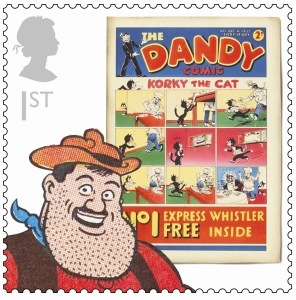
Desperate Dan


20130305-225941.jpg
Photo from Wikipedia

So here’s the final character from Still, Daniel…and no, he looks nothing like Desperate above 😉

Daniel was born in November 1953 to middle class parents who lived in a semi-detached house they owned on the outskirts of Blackheath in South East London. Daniels father was an accountant, his mother a housewife. He had a younger sister who his father adored. The Hopwood’s happy family home looked from the outside perfection itself, but Daniels father was cold towards his son. He often became violent when he was drunk and used a belt to punish Daniel, often for no reason, on a regular basis.

Intelligent but introverted, Daniel didn’t mix well at school, and was often bullied. At secondary school he met Ronnie, who intervened when an older boy was picking on him and the two struck up a friendship. As an adult Daniel had convinced himself that the only reason Ronnie had rescued him was to make himself look good. Daniel would often do Ronnies homework and in return Daniel spent most of his time at Ronnies house, preferring that to being at home around his father.

With mousy hair and grey eyes he was rugged in his looks and awkward around girls. He lacked social skills and preferred his own company to that of others.

After leaving school he trained under his father as an accountant, his father’s choice, not his, and when he was 16 he was with Ronnie when they met Laura. Daniel thought at the time she was beautiful, but unfortunately, it was Ronnie who had the guts to ask her out. Daniel prayed that their relationship wouldn’t last and during the year that it did he found himself falling in love with Laura, trying to keep his distance and his feelings from Ronnie.

When Laura and Ronnie broke up Daniel began to start visiting Laura, as a shoulder to cry on, and it was Daniel she confided in when she discovered she was pregnant. With no hope of reconciliation between Laura and Ronnie, Daniel began to worm his way into Laura’s affections, and became her rock. He stood by her when she gave birth to her daughter and when he finally found the courage to ask Laura to marry him she accepted. He promised that he would treat Laura’s daughter Ruby as if she was his own, and at the time, he meant it.

When Laura became pregnant with Daniels child he began to resent Ruby’s presence. As far as he was concerned Ruby was ruining the happy life he wanted with Laura and taking up Laura’s time…time that she should be spending with him, and of course, she looked so like Ronnie. A huge argument resulted in Daniel lashing out and Laura losing the baby. They were later told that Laura would be unable to have more children. Daniel was ashamed and wracked with guilt but became even angrier with Laura, believing that she was still in love with Ronnie.

He became spiteful, aggressive and domineering, to the point where even though he knew the way he was behaving was wrong he couldn’t help himself.

Laura had a break down and was sent to hospital. Daniel was relieved that Ruby had gone to stay with Laura’s mother and during Laura’s absence he started drinking heavily and sleeping with other women. When Laura returned he tried to make amends but then his father died and all the hurt and pain of his childhood came crashing down on is shoulders.

Laura left him but he persuaded her to come back, truly believing that he would, could, change and that Laura was the only person who understood him. He tried to be kind, gentle and loving. The man he had been all those years ago, but the strain was too great. Believing that Laura didn’t love him, and wondering why she had come back, he found himself attracted to a woman at work and was making plans to leave. But Laura found out and by the time Daniel realized what a huge mistake he was making it was too late.

Laura packed her bags and Daniel knew it was the final straw and that Laura meant it. In his anger he told her that he didn’t need her and had never loved her as she left, but inside his heart was breaking and he knew that he didn’t deserve the woman he had destroyed.

So now you’ve seen all 4 sides of the story. These 4 characters have been part of my life for 2.5 years, and I just can’t let go of them. They don’t talk to me like I know some writers say their characters do, but I’m so attached to them lol

For some reason The Hubster isn’t gelling with our Daniel, but can’t say why. Is there something missing? Should he be more dislikable?

Tomorrows post will be a little bit late….as I’m up at Faber all day 🙂

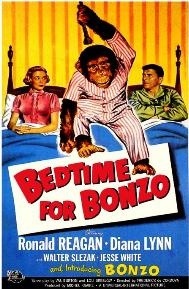
Bedtime For Bonzo?


I bet that title has confused you *snigger* 😉

The third (and probably my favourite) character from “Still” let me introduce you to Ronnie, but I guess he could have been a Ronald 😉 Please excuse any errors, this is taken from my note book.

Ronnie was born in February 1953 to an Irish father and English mother who were never actually married. His parents lived on a Council Estate in Lee, South East London. The youngest son of 4 boys he was a tear away (so his mother Liz said) from the moment he could walk.

Curly auburn hair when he was a toddler (which, as an adult only begins to curl when he needs a haircut) and deep blue eyes like his fathers, his ruddy complexion meant that he always looked like he’d been dashing around, but then, most of the time he had. He always had an abundance of energy that continued into adulthood.

Not doing well in school he preferred to play truant and found himself in detention frequently. His mother despaired, but he was her favourite. When he was 12 his father Patrick left the family and went back to Ireland because he couldn’t find work, leaving his mother to bring up the four boys on her own. At secondary school he met Daniel and they became best friends. Although from very different backgrounds the boys shared a love of fishing. It was the only thing he could really remember doing with his father.

At 15 he left school and got himself an apprenticeship with a local builder. He enjoyed being outside, the manual work and the banter with the other workers. But with two of his older brothers involved in petty crime it wasn’t long before he found himself with a police caution.

At 17 he met Laura, a girl who served him in a local café where he and Daniel often met. He asked her out and within weeks they become “a couple” spending a lot of time at the local pub and having a weekend away at his aunts caravan. They were inseparable for a year.

Ronnie started to get friendly with a group who knew his brothers and they introduced him to drugs. His relationship with Laura suffered, and Ronnie moved out of home and into a squat. He and Laura split up and his is mother Liz contacted his father because she was worried.

His father Patrick returned to London in 1972 and with their parents back together the whole family moved back to Ireland, his mother agreeing as she wanted to get Ronnie away from the drug culture he had become embroiled in.

Ronnies father was a struggling builder, but with the help of his sons they made a success of the business and it thrived. He often thought about Laura and Daniel, wondered what happened to them, but as the years went by he put them to the back of his mind.

With a huge zest for life he likes to play practical jokes and to be the center of attention. In his early 20’s he married an Irish girl, but they divorced after only 3 years with no children. Ronnie threw himself into work and with 7 nieces and nephews he was content to stay single and still play the field.

He still walks with the arrogant swagger he had as a teenager, but at 45 he is lonely, realising that he can no longer chat up women like he used to. One of his brothers has suggested he use a dating agency, but he is too embarrassed. Loyal, attractive for his age (although grey and balding) and with a successful business, he is still hot headed. He plays golf with his brothers.

He receives a letter from a young woman in Kent called Ruby, who thinks she may be his daughter and they speak on the telephone. The old memories of Laura and Daniel come flooding back and he immediately makes plans to travel to Kent. He is excited at the prospect of being a father, but even more so about seeing Laura. He regrets the way he treated her and wants to make amends.

So what has my character Ronnie got to do with Bedtime for Bonzo? I’m kinda thinking that Ronnie’s mum had a bit of a thing for Ronald Reagan 😉

20130224-195434.jpg

How Do You See Yourself in Relation To Your Readers?


I’m not a published author ( yet lol) so I’d never really thought about my readers. No, sorry, that’s wrong. I have kind of thought about the type of person who would read my books, but I’d never thought about how I want to be seen by them.

Do I want them to see me as a teacher? Sharing my knowledge.

OR

As an entertainer? Delighting them with a captivating story.

So here is…..A Letter To My Reader (from my journal)

20130107-110037.jpg
Dear Reader,

You now hold in your hand a copy of my book. This is the future by the way 😉

It is NOT autobiographical, although, I will admit that there are several themes within it that I have had some experience of. As a writer, that is inevitable. The character of Laura is NOT me, but we do share traits and opinions. Good grief, I was a much more rebellious teen and owned enough makeup to open my own shop!

The book was written because of my fascination with people. I find everyone interesting. I like to know what makes people do the things they do and I’m a big believer in the fact that we are all responsible for our own actions, regardless of what influences we have had in our childhood. Our childhood is what makes us who we are, but we’re all capable of change, if we want it badly enough.

I guess what I’m trying to say is that my motivation to write comes from a need to understand people. I don’t consider my work will tell you anything you don’t already know, but I hope it makes you think. I hope it makes you question your own decisions and that you will ask yourself “What would I do?” if you were in that same position. Perhaps you will think about your own past decisions and those that I’m sure you’ll make in the future. Next time you’re faced with making a choice, think long and hard, and remember, this is it, you only get to live life once!

Hmmmmmm…..so perhaps I am a teacher of sorts? Or somewhere in between?

What about you? How do you see yourself in relation to your readers?