Dealing With Negative Reviews – J. Keller Ford


I’ll do my Faber post tomorrow, because today I have a very special guest 🙂

J. (Jenny) Keller Ford is a quirky mother of four, grand-mother and scribbler of young adult fantasy tales. She has an insatiable appetite for magic, dragons, knights and faeries, and tries to weave at least one into every story she conceives. Her muse follows her everywhere and talks incessantly, feeding her ideas for stories 24/7.

When she’s not torturing her characters mercilessly, J. Keller enjoys living in sunny Florida, listening to smooth jazz, collecting seashells, swimming, bowling, riding roller coasters and reading. Her most loyal fans (beside her family) consist of two Australian Shepherds, a mixed-breed hippy dog, and a precocious orange cat, all of whom believe J. Keller is their slave. She thinks they might be right.

20121210-131043.jpg
Jenny has recently been published in the Make Believe Anthology and today, is talking about…..

20121210-131124.jpg

Dealing With Negative Reviews

Actor Anthony Hopkins once said, “My philosophy is: It’s none of my business what people say of me and think of me. I am what I am and I do what I do. I expect nothing and accept everything. And it makes life so much easier.”

It’s a philosophy that has taken me a little time to realize, but I finally got it.

I think it’s important to understand I’ve always been someone who craved approval. I need it, even now. It must be the Leo in me coming out. I’m a perfectionist. I have to have things certain ways and I need to know I’m appreciated. It’s a part of who I am.

It’s no wonder then that I craved approval when I first started writing. I was actually terrified to throw my work out to the public, frightened by what they would think. Self-doubt and I became great friends, until the day Desire knocked on my back door. Next thing I knew, I joined an online critique site. Talk about a rollercoaster ride. Some critiques gushed with praise. Others seemed to trash everything I wrote. Self-doubt told me to stop. Desire screamed, “Do it again and again! Don’t you dare give up!” I joined other writer sites, other blogs. I met up with some fantastic beta readers who weren’t afraid to show me the flaws in my writing while keeping me motivated and focused.

Then one day this past Spring, it happened. I got my first offer of publication. I was elated. All the hard work, all the dedication, all the long hours of honing the craft of writing finally paid off. A publisher wanted MY story.

The next few months were dedicated to heavy doses of Marketing 101 and I was still riding high on the publishing wave. Then the end of November came and the ARCs (advanced reader copy) went out to various readers and reviewers. A new visitor came to see me: Anticipation, and I found myself wondering once again if ‘they’ were going to like it.

Anthologies are a double-edge sword as they contain a review of the anthology itself, and then individual reviews. MAKE BELIEVE has garnered at least twenty reviews and has phenomenal ratings. I think I can speak for all six authors when I say we’re thrilled to see the anthology so well received.

As for my story, The Amulet of Ormisez? Well, let’s just say it hasn’t been one of the ‘better’ received stories. Everything I tried so hard to do right turned out so wrong. Self-doubt cackled and sat her big rear-end on top of me and wouldn’t move
that is until I got a few virtual smacks along with a few stern words from my beta readers and my daughter. They reminded me that my publisher, who is VERY picky about what they publish, believed in my story enough to publish it. It took my daughter to remind me that a lot of people HATED Harry Potter and many reviewers claimed there were plot holes all over the place. “Ha!” she said. “Do you think Rowling cares what they think?” Another friend reminded me that even Stephen King is not a stranger to bad reviews, but does that stop him from writing? The kicker came when a friend said to me, “Stop caring about what other people think. The only opinion about you that matters is your own.” Something clicked.

So, here I am, a published author and stronger and wiser for the wear. I’ve weathered the ‘review’ storm of my first published piece, and you know what, it wasn’t that bad. Some people loved my story. Some didn’t. That’s okay. My writing isn’t going to appeal to everyone nor should it. As the incomparable Anthony Hopkins said, “It’s none of my business what people say of me and think of me. I am what I am and I do what I do. I expect nothing and accept everything. And it makes life so much easier.”

Amen, Mr. Hopkins. Amen.

Thank you so much Jenny, I really enjoyed that. And like you say, even Stephen King gets bad reviews! Are you dreading that first bad review? Have you had one? How did you deal with it? I seriously think I will cry lol, my critique at Faber was bad enough!

Check out Jenny’s Excellent Blog (I’ve been a follower for a while now) and if you’d like to purchase a copy of Make Believe its available now on Amazon.com and Amazon.co.uk as a download for Kindle. I’ve already added it to my wish list 😉

Editing A Novel – Tips From Della Galton


Continuing our theme of editing this month I have a very special guest today *grins*

Today’s blog guest is the wonderful Della Galton who is a working writer (just tap her name into Amazon!!!) and agony aunt for Writers Forum Magazine. She has had over 1,000 short stories published in national magazines in the UK, and throughout the world.

Editing A Novel
So you’ve written a novel at top speed – what now? Package it up and send it out to all the publishers and agents in the Writer’s Handbook? Hold on just two ticks. Here are my top five editing tips.

Tip One
Put it to one side for at least a fortnight, preferably longer, a month is good. Then you can go back to it with your cool editor’s head, not your passionate writer’s head.

Tip Two
Read it through in its entirety. Make some notes based on these points.
Does it begin in the right place?
Is it in the right viewpoint?
Does the plot work?
Is the main character really the main character?
Is the middle saggy?
How is the dialogue – good, bad or indifferent?
Can you tell the characters apart?
Does it end well?

Tip Three
Rewrite, based on your notes.

Tip Four
Repeat Tip One.

Tip Five
Edit again, as follows:

Cut Repetition
For me, the number one fault in first drafts is repetition. I often repeat myself when I write a first draft, both in meaning and with words. I don’t know whether it’s they way my brain works, but I’ll very often find that I’ve repeated a word either in the same paragraph or in the one below. It’s almost as if my writing brain is saying, that’s a good word, we’ll have another one of those, shall we?

I also have favourite words. You’ll have your own, but these are some of mine: just; quite; suddenly; that; and bit. I sometimes use the word search facility to go through and delete these words in my final edit.

Another way of repetition is to say the same thing in a different way.

And standing there in the sun, on that dusty afternoon Pam realised she’d never felt quite so happy in her life, which wasn’t all that surprising when she thought about it. Pottering around a car boot sale was one of her favourite ways to spend a Sunday morning.

These two sentences are both telling us that Pam is happy. Only one of them is needed, although in the end I discarded both in favour of showing Pam being happy rather than directly telling the reader.

Check for overused punctuation
I’m also rather fond of dashes – I litter them through my work – and it’s a difficult habit to break. You’ll find plenty besides the two in this paragraph that I’ve put in deliberately.

A good rule is that less is more. Be sparing with exclamation marks. They tend to be very visible.

Watch for telling when you’ve already shown

This is effectively another form of repetition. There is no need to show the reader something and then tell them as well.

i.e. Tears streamed down Laura’s face. She was very unhappy.

Cut adverbs
Fashions change, but I am of the opinion that adverbs should be used sparingly. They tend to weaken writing, rather than strengthen it. If possible use a strong verb instead. For example, instead of saying, he ran quickly, try he raced.

Cut clichés
Most clichĂ©s came into being because they were the perfect way to say something. So why change them? The answer to this, I think, is that anything we hear too often is less meaningful – after a while it loses its meaning, and hence its impact, altogether.

They will certainly not make your writing original.

These are two good reasons to try and avoid them.

And finally, is it possible to over edit?
At the risk of contradicting myself, then I’d say, yes it is. Our first work tends to be a splurge of words that pour out – well they pour out on a good day! On a bad day it might feel more like pulling teeth with no anaesthetic. First drafts have a rawness about them and hopefully a sparkle. And I think that it’s possible to take this sparkle out with too much editing.

I’ve seen writers who have actually managed to polish all the sparkle away from their original piece, leaving a final draft that is flat and rather emotionless. Please be careful – but in the final analysis you’ll have to trust your instincts about when enough is enough. This gets much easier with time and experience.

Thank you so much Della, some great tips there!

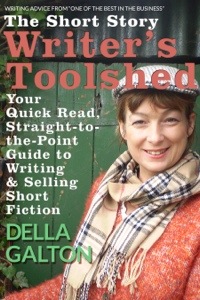
If you found that useful, (i know i did!) nip over to Amazon where you can download Della’s eBook The Short Story Writer’s Toolshed – Your Quick Read, Straight-To-The-Point Guide To Writing and Selling Short Fiction (Writer’s Toolshed Series)

20121205-161740.jpg

Originally written as a series for Writers’ Forum Magazine, this snappy, no-nonsense guide has been expanded, amended and updated. Using new examples from her own published short fiction, Della Galton takes you from ‘story idea’ to ‘final edit’, and demonstrates how to construct and polish the perfect short story, ready for publication.

Ahhhh, yes, repitition lol….I have a HUGE problem with that. Did any of those tips strike a chord (CLICHE ALERT lol) with you? 😉

After NaNoWriMo – Editing Part 2


Part 2 of the guest post by Bridget Whelan which I’ll be making much use of this month 😉

After NaNoWriMo
Three bite-size guides to editing and revising your NaNoWriMo novel.

PART Two

Put down everything that comes into your head and then you’re a writer. But an author is one who can judge his own stuff’s worth, without pity, and destroy most of it – Collette

Five ways of editing that first rough draft

1) Cut and cut again. Be brutal. You thought you’d written 50,000 words of your NaNoWriMo novel? The harsh truth is that you probably need to ditch 20,000 of those words. You’ve got a copy of the original so you can chuck everything away knowing you have the freedom to change your mind. In fact, keep a copy of every major revision. It gives you confidence knowing that nothing is lost, and that every major change can be undone. The reality is that once paragraphs, pages and chapters have been deleted you’ll wonder how they ever had a home in your manuscript.

2) Remember that adjectives don’t get lonely: they do not have to travel around in pairs – the kind and pleasant man; the warm, dry day. Every time you see two together ask yourself which one you really, really need. Or if you need any.

3) Take a long, hard look at any descriptive passages, especially the ones you like the best. Samuel Johnson said that if he you ever come across a sentence he had written that struck him as being particularly elegant and finely crafted then he knew he had to cut it. It was probably written for his own enjoyment rather than because it helped the reader to understand what was going on.

4) Have you started in the right place? Classic advice is to start a story in MEDIAS RES – in the middle – in other words dive in. Have you chosen to start your NaNoWriMo novel a long time before the big event occurs? Why? If the answer is because it’s a good introduction or it sets the stage, then cut. Sometimes we write a beginning more for ourselves than the reader. We are working our way into the story, getting a feel for the characters and their take on the world. You might need that introduction to get you started, the reader doesn’t. So, write it if it helps you to launch a story and cut it out at the editing stage – which is now.

4) Show don’t tell is the command burnt into the heart of every creative writing student, but sometimes it’s ok to tell. The reader can’t live through every moment. Use dialogue to dramatise the big scenes, or the moments where important elements of character are revealed. It is not for the ordinary do-you-want-a-cup-of-tea exchanges (or boring small talk at parties unless it propels the narrative in some way.)
5) Don’t introduce all the characters at once. Do it one at a time with a little physical description or back story so we can remember them. (For example: Cara tucked a strand of her sand coloured behind her ear and swore softly, her previous career as an advertising writer meant she knew how to make words work for her.) Ask yourself if you have to give a name to all the minor characters. Remember that a name may be the least interesting thing about them. They could appear as their job or the function they carry out in the story. For example: the teacher said
. the neighbour smiled…

20121128-081757.jpg
Courtesy of Carlos Porto freedigitalphotos

Coming up in PART THREE six tips that will help you get your NaNoWriMo novel ready for a reader. But if you want to read that post, you’ll have to pop over to Bridget’s blog tomorrow 😉

Please leave a comment for Bridget with your thoughts and opinions, or pop over to Bridget’s Blog to say Hi

After NaNoWrimo – Editing Part 1


So how we all feeling this morning? Any Wrimo’s take it to the wire last night? We had one lady on the Kent FaceBook group who finally hit the 50k at just before 11.30pm (UK time). I couldn’t go to bed before she’d finished and validated.

So that’s it, my official ML duties are over! Awwwww, it’s been fun, but now this is where the real work starts. We have our 50,000 words, so now what? The theme this month on the old blog will be editing, and to start us off, a guest post by Bridget Whelan who teaches Creative Writing. I think this will be very handy 😉

After NaNoWriMo
Three bite-size guides to editing and revising your NaNoWriMo novel.

PART ONE

Write drunk, edit sober – Ernest Hemingway

The relief is wonderful. Nanowrimo is over, done and dusted for another year. You have so much freedom and so much time to do other things. Some of you may even have a NanNoWriMo certificate to prove you took the challenge and won and – as long as you didn’t write your name over and over again – you should be proud of yourself. Very proud.
​Of course, some of us didn’t mange 50,000 words, but as long as you have more words written now than you did on November 1st you’ve made an important step in your development as a writer. And you know that yourself until a small steely voice sounds in your head and says, it’s all rubbish. And the bits that aren’t rubbish have been done before.
​That’s the voice that stops you writing. That’s the voice that NaNoWriMo silences with a frenzy of activity. That’s the voice of an editor. It’s a mean-spirited companion, dismissive of hard work and effort. It won’t offer any rewards for sticking with it, reaching goals and staying up late. All it cares about is what’s on the page and when you come to look at what you’ve written during NaNoWriMo, that’s all you should be care about too. Even when it means blood on the floor.
​
Three things to do before you pick up a red pen or press delete

1) Rest and Recover. You wrote in a fever. You need the story to settle in your mind and you also need to create some distance if you’re going to listen to that editor’s voice. How long? At least two weeks.
2) Read. Anything except your NaNoWriMo novel. Read poetry for the language. Read cheap trashy novels you hate to learn what not to do. Read cheap trashy novels you love to learn how they captured you. Read action novels for pace and crime fiction for suspense. Read horror and speculative fiction for imagination and fairy tales for permission to push the boundaries (A brother and sister abandoned by their parents and enslaved by a female cannibal? Did you go as wild during NaNoWriMo as Hansel and Gretel?)
3) Watch the video of Kurt Vonnegut describing how to plot a best seller. It will have you laughing and thinking.

Four things to do when you read your NaNoWriMo novel again

1) Breath deeply. Dive in. If you can, try to read all the way through in one sitting. Ignore your emotions: horror, embarrassment, mild pleasure, surprise. Read with a pen in your hand and summarise every chapter (or five thousands words if it isn’t broken down into chapters yet). No one will see these notes so they can be as clunky as you like. Stick to about 100 words for each summary – these are working notes and shouldn’t take up too much of your writing time
2) Imagine you are being interviewed on radio. How would you describe your main character? What does your main character want? No waffle: be specific. The radio audience won’t like vague phrases about rites of passage or someone finding themselves.
3) Even if you have written The End in big bold letters and drawn a line underneath it, consider possible alternative ways of resolving the issues in your NaNoWriMo novel.
4) Ask yourself if you want to spend a lot of time living with this story and the people who inhabit it. Vikki described herself as being haunted by the story she was trying to tell in first Nanowrimo writing. That’s a very good place for a writer to be.

Coming up in PART TWO (tomorrow) five ways of editing that first rough draft.

A great article Bridget, I will definitely be following your advice 🙂

Please leave a comment for Bridget with your thoughts and opinions, or pop over to Bridget’s Blog to say Hi

Water, Water Everywhere


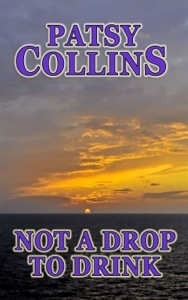
Yesterday was launch day for Patsy Collins. Her collection of 7 short stories, Not A Drop To Drink, has been published under the Smiling Dog imprint at Alfie Dog

Here’s the blurb.

Scientists say the human body is around 70% water. We know that’s not true.
Oh, we could drink ‘straight’ H20, but usually we don’t. More likely it’s vitamin rich juice or teeth rotting cola. We like a nice cup of tea to calm us down or cheer us up. Perhaps a nice glass of wine to celebrate or drown our sorrows. Two glasses. Too many glasses.
Our bodies do contain liquid of course. Never just water. What’s in yours; acid and bile or the milk of human kindness? Blood, sweat and tears of joy or sorrow?
It’s these waters you’ll find running through these stories.

20121014-080416.jpg

I’m a huge fan of Patsy’s (*whispers* Not only is she a great writer but she’s a lovely lady too!), so I was thrilled to get the opportunity to ask her a few questions 🙂

1. What made you decide to release a book of short stories after having 2 successful novels?
It seemed like a good idea at the time! Actually ‘Not a Drop to Drink ‘ really did start as just a vague idea. I mentioned it to Rosemary at Alfie Dog Fiction and she offered to edit and publish the book under the Smiling Dog imprint to help promote my writing and the Alfie Dog website – where you can download around 600 truly excellent short stories by authors who write in a wide range of genres. My husband agreed to produce a cover so I didn’t have to do anything really, except email Rosemary a selection to pick from and agree with her excellent suggestions on layout etc.
2. What inspires you?
I often get idea when I’m carrying camera gear along the beach, climbing hills or working on my allotment, so probably it’s getting puffed out in the fresh air. Just in case I’m wrong and cake is my real inspiration, I eat loads of that.
3. How much time do you spend on research?
It depends. I tend to base stories in areas I know and give characters jobs I’ve done which helps quite a lot. I’ve worked in shops and offices, on a ship, as a waitress, on a farm and as a telephone operator, so I’ve already done a fair bit of research. When I do need to research anything new, I do it as thoroughly as possible. I’ve attended inquests, got lost on the underground and sang carols in order to write about these things.
4. Describe your average day?
If I’m working – drink tea, go to work, write in my lunch break, come home and check emails etc, submit to a magazine, cook dinner, drink wine, read, sleep. If away in the van – drink tea, climb a hill, photograph ships, visit a castle (or all three), write, cook dinner, drink wine, read, sleep.
5. What book are YOU currently reading?
I’ve almost finished Burning Bright by Tracy Chevalier and am really enjoying it.
6. Any advice for aspiring authors?
Write! Having a go is the best way to learn. Reading books of advice, attending classes and learning the rules are all a good idea, but you need to actually do the writing, not just know the theory.
7. How do people get hold of your book?
‘Not a Drop to Drink’ is available from the Alfie Dog website.

Thank you so much Patsy for stopping by today. Good luck with the new release, you know I’ll be downloading a copy don’t you! 🙂

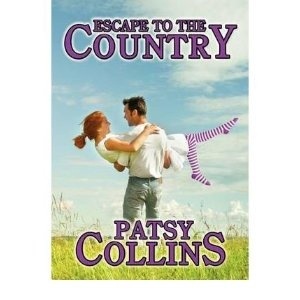
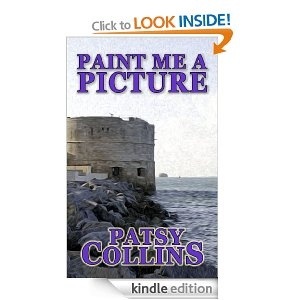
Do check out Patsy’s other work. Escape to The Country and Paint Me a Picture both available on Kindle. I promise, you won’t be disappointed 🙂

20121014-081215.jpg

20121014-081224.jpg

Patsy is one of many Indie authors, who have decided to go down the Kindle route, and I wish her every success. My own thoughts on this are that if you’re a “good” writer, your work will shine, no matter how, or where its published. So please support our indie authors. It’s authors like Patsy who are paving the way for writers like me 🙂

And don’t forget to check out the Alfie Dog website (link above). Is it something YOU would consider?


Bonus post today…..

I’m guesting for Chris at The Kelworth Files, where he asked me a few Nano related questions 🙂

kelworthfiles's avatarThe Kelworth Files

I’m pleased to shine the spotlight on Vikki tonight!

What’s the most unusual part of your writing process?
It’s probably not unusual as such, but
..I have a practice session every day. Before I write anything else I do a writing prompt, by hand in my notebook. It’s usually first thing in the morning, that seems the best time. It gets my brain in gear, helps me to focus, and puts me in writing mode.

Where are your backup files?
I use memory sticks. I seem to collect unusual ones. I have a memory stick pen (pen one end, USB the other) and a necklace. The necklace looks like a black heart, but actually comes apart to reveal a USB.

What advice would you give to all your fellow WriMos?
Don’t give up! I’ve seen it happen too many times 😩 You get to 15,000 words (or less) and decide that


View original post 251 more words

Next Post


My Guest post is now live!!!! 🙂

Please go and convince Sue to enrol on a course lol 😉

Sue's avatarthe long and the short of it

A huge thank you to Sue for inviting me onto her blog today
 I don’t think she realised that when I’m enthusiastic about something, I can ramble for hours!

So Sue’s asked me to convince her of the merits of creative writing courses, classes and workshops. I’m hoping that by the time she reads this she’ll be enrolling on everything she comes across.

My first experience of ‘creative writing’ was a baptism of fire. I decided (through madness or stupidity, I still don’t know which) to accompany a friend to a course at our local Adult Education centre. I hadn’t written any fiction since leaving school, although I had been journal writing for several years. That was exactly 2 years ago this month, and it was one of the best decisions of my life! I’ll be honest; the course itself was a little boring. I found myself nodding off in several sessions! But somehow, through all the yawning something clicked. Something happened


View original post 960 more words

The Long & The Short Of It – How Learning My Craft Has Changed My Life


Today, I’m guesting over at Sue Howe’s blog The Long and The Short Of It 🙂

Sue asked me if I could do an article about writing workshops, classes and residential schools. I’m trying to convince her to come along to Swanwick you see 😉

So here’s the start of the article…..to read more you’ll have to nip over to Sue’s gaff 🙂

A huge thank you to Sue for inviting me onto her Blog today….I don’t think she realised that when I’m enthusiastic about something, I can ramble for hours!

So Sue’s asked me to convince her of the merits of creative writing courses, classes and workshops. I’m hoping that by the time she reads this she’ll be enrolling on everything she comes across!

My first experience of “creative writing” was a baptism of fire. I decided (through madness or stupidity, I still don’t know which) to accompany a friend to a course at our local Adult Education centre. I hadn’t written any fiction since leaving school (many, ahem, years ago) although I had been journal writing for several years. That was exactly 2 years ago this month, and it was one of the best decisions of my life! I’ll be honest; the course itself was a little boring. I found myself nodding off in several sessions! But somehow, through all the yawning something clicked. Something happened to me during that short course, and it’s been driving me on ever since.

20120923-173557.jpg

Please pop over to Sues blog to read the rest of the article, and leave a comment. Tell her Sue, you have to go to Swanwick next year! 😉 Actually, thinking about it, you all have to come! 😉

Where Do You Write?


Well, now I’ve finished with my guesters (a HUGE thank you to everyone who took part) I can conclude that:

1. The bed is very popular

2. Anywhere seems to be the ok

3. I made myself jealous lol

In a nice way of course. I guess the whole exercise made me realise that I needed to get organised. I was fed up writing at the dining room table. I was fed up not being able to get to all my stuff when I needed it (ie working from piles) and I was fed up moaning about it. I needed to take action. I needed to get my shit together (pardon my French).

Sooooo, I made plans 😉 More on that tomorrow *squeals*

In the meantime, check out Ross Gales video….the bath…..really? Lol

Ross created this video for Jeff Goins “I Am A Writer” competition where he received the accolade of 1st Runner Up (to Dustin’s video, remember that?).

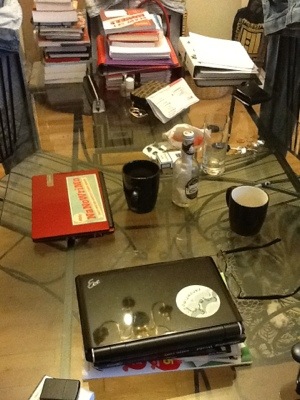
And here was my absolutely pathetic writing space *mutter grumble mutter* whilst I was hearing about some of your lovely desks! Lol

20120713-092423.jpg
I hated it with a passion lol….it was getting me down.

Check out Sara Flowers Blog where she asks her readers about their writing spaces. Seeee, I’m not the only nosey one 😉

Also, Simon Whaley’s blog, where he talks about the importance of having your own space.

Sooooo, if you didn’t take part in my guest posts, and didn’t share info on where you write, I ask the question Tell me, where do you write?

The Necessary Evils Of Writing – Meet Becca!


No “to do list” post today, but only because I have a special guest AND you lot get the chance to win a FREEBIE! 🙂

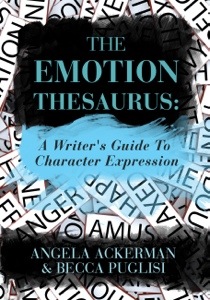
Becca Puglisi is one half of the successful blogging team at The Bookshelf Muse who, back in May, released their first book (I say first, as going by this one, there will be more I’m sure of it!). The Emotion Thesaurus: A Writers Guide to Character Expression Lists the body language, visceral reactions and thoughts associated with 75 different emotions, this brainstorming guide is a valuable tool for showing, not telling, emotion. The Emotion Thesaurus is available for purchase through Amazon, Barnes & Noble, iTunes, and Smashwords, and the PDF can be purchased directly from her blog.

20120825-090221.jpg
If you haven’t got a copy already OMG where have you been?

The Necessary Evils of Writing

20120825-091423.jpg
Last winter, I attended an unusual orchestra performance that included a Q&A with the conductor and musicians. After one segment, a question was directed to the oboe player. I knew some oboe stuff—mainly, that it’s a woodwind instrument and it’s black. Impressive, I know. What I didn’t realize was that while other people go to the Miscellaneous Music Paraphernalia store to buy pieces for their instruments, oboe players make their own reeds. And when the oboe player was asked how much of his working time he spent fashioning them, I was floored when he off-handedly responded, “Fifty percent.”

HALF of his time, shaping and scraping reeds! I honestly had a hard time fathoming this. I mean, musicians become musicians because of their love of music, because they want to play it, create it, enjoy it. Yet for half of his “work” time, an oboe player isn’t playing a single note.

*boggle*

But when I started considering this information in light of other professions, I realized that it’s a fairly common scenario. I used to teach elementary school. I chose that career because I enjoyed teaching. I was good at it. But I discovered early on that I’d be spending just as much time writing lesson plans, grading papers, managing behavior, conferencing with parents, attending faculty meetings, and supporting various school functions. I may not have particularly enjoyed these things, but they were necessary to the job.

And now I’m learning that it’s no different for authors. We really just want to write, but how much of our allocated work time is spent on social networking, promotion, doing market research, and sending out queries? These are things I don’t like doing. Some of these things I’m shockingly bad at. But they’re necessary. To make a successful career as a writer, I need to do many, many things that don’t add to the word count of my current WIP.

Don’t misunderstand me. The writing is the most important thing. No amount of social networking and market research is going to make you successful without a quality product, which can only be accomplished through lots and lots of writing. But all the other stuff is important, too.

The oboe player, when asked his question, didn’t sigh or respond bitterly or shake his fist at the sky and go off on an artistic tirade. He accepted, as a matter of course, that the time spent fashioning his reeds was crucial to achieving his goal of making beautiful music. So I’m taking a leaf from his book. I will no longer complain about having to do the things that are necessary to make me a success. I will allocate the time I have to complete these tasks (without sacrificing my writing). Though I don’t think I’ll ever be comfortable striking up conversations with strangers at conferences, I can at least do it without fear and trembling and the gnashing of teeth. Instead, I’ll look at it as something that needs to be done to achieve my goal, and do it the best I can. Then when I do get back to writing, I can go with a clear conscience, knowing that I’ve done everything possible to make my dream come true. And I’ll be encouraging my writer friends to do the same.

So, think about the “writing things” that you don’t enjoy doing—things you know you need to do, but frankly, you’d rather be writing. Pick ONE that you will choose to look at as a necessity rather than a burden to weigh you down. I’d love to know what it is, so I can shake the writerly pom-poms in your general direction. What boring, unpleasant, or phobia-inducing part of the successful writer’s agenda will you embrace today?

Thanks Becca 🙂
For me, it has to be editing *groan* I just hate it with a passion lol

So what writing thing don’t you enjoy doing? Leave a comment and next Sunday I’ll get Becca to randomly select one of you to receive a FREE PDF copy of The Emotion Thesaurus 🙂 Now that’s a great deal, don’t you think? 😉