Never Suffer From Story Timeline Confusion Again!


A quick post today I’m afraid, but with the link to a fabulous resource!

20121212-145454.jpg
Courtesy of Stuart Miles/freedigitalphotos

Those of you who read the Womag blog would have seen this, but for those of you who don’t…..

Wendy Clark has a very clever husband! He has designed a Story Timeline template for other writers to use (and share, on condition she is credited).

Follow the link above to download, and if you’re going to share please credit Wendy (or rather, Mr Wendy) with a link.

Have fun! I’ve downloaded mine already, and boy, is it gunna come in handy!

PLEASE NOTE:
A newer version is now available with extra features. Find the details here : Story Timeline

Who Am I?


I wanted to rope the hubster in on this one, but I got impatient. So I thought I’d try it on my own. Write the answers down as quickly as possible. I got to about number 12 without pausing…then it got hard lol

Who Am I?

1. Vikki
2. A Woman
3. A Mother
4. A Wife
5. An Animal Lover
6. A Cat Owner
7. Unfortunately, A Smoker
8. An Aspiring Author (snigger)
9. Online, AngelChild
10. A Member of Weight Watchers
11. A Book Addict
12. A Blogger
13. A Fan of Oasis
14. A Chocolate Lover
15. A Procrastinator
16. A Person Who Finds It Hard To Make Decisions
17. A Carer (to everyone!)
18. A Tea Drinker
19. An iPad User
20. A Convertible Car Driver

He he he…..ok, 2 things struck me.

1. Are these answers more about “what” I am, rather than “who” and is there a difference?

and

2. There is a distinct lack of personality traits. Nothing below the surface, if that makes sense?

Am I shallow? Are these the things that are most important to me about myself and what define me?

20121220-081143.jpg
I guess it’s more about how you interpret the question? Has anyone else tried it yet and did you find yourself skimming the surface?

Ok Laura Hopwood (my MC in The Last Word Cafe) you’re next!

One final time….. Who are you? The owner of 9 Blog of the Year Stars now! Thanks to Pat Wood 🙂 Thank you so much honey! I will do some more nominating tomorrow!

Writing For 100 Hours?


Are we all still here? Lol 😉

Could you write for 100 hours, straight? LIVE on a web cam?

Well that’s exactly what David Varela is doing, and in the process, raising money for charity. David is hoping to raise £3000 for The Arvon Foundation to go towards their work with children. They run writing schools to encourage children to write.

So David will be writing for 100 hours, with as few breaks and as little sleep as possible. If you donate, you can request a subject for him to write about.

Thanks to Hannah in my writing class for the heads up on this….absolutely amazing!

Please check out David’s Web Cam & Site which I can’t embed here, but what I can imbed is an interview David did recently about his challenge.

He must be absolutely shattered poor luv!

Would you ever consider a writing marathon? I wrote for a whole day once (about 8 hours) when the hubster was at a chess thingy….it was exhausting! Lol

Beautiful + Inspiring…GO ME!


I’ve been nominated for the Beautiful Blogger Award by Hezalyte at Iridessence Indeed and by Ayesha Shroeder Anushka at Finding My Creature Kristi at Dressed To Quill Jane Ayres Patsy Collins and Cheryl at Catching Fireflies for the Very Inspiring Blogger Award *squeals* Thank you so much ladies 🙂 What can I say? How many nominations can a girl get in a 2 week period? Lol *blush*

I’ve already received both these awards in the past, so wow! Surely I should be drop dead gorgeous by now and inspiring everyone across the world *snigger* No? It doesn’t work like that? Oh well 😉

The rules are the same for both of these. Say thank you to the blogger who nominated you (done). List 7 facts about yourself and then nominate 7 bloggers….so lets see, you know I’m a rule breaker, so rather than list 7 things about myself I’m going to show you the town where I live. All the photos taken by me 🙂

Some of you may know I live in Rochester (Kent) in the UK. The town was frequented by Dickens who lived close by. He loved the place (as do i!) so much that he was inspired to use a lot of the locations in the town for his books.

This is the Cathedral graveyard where you’ll find the grave of Little Dorritt.

20121130-073822.jpg

Below, The Vines, where Dickens would often be seen walking (no doubt mulling a plot over). He was seen in here, leaning against a fence people watching the day before he died.

20121130-073843.jpg

The Cathedral, 2nd oldest in the country, after Canterbury.

20121130-074743.jpg

Dickens chalet, where he wrote some of his masterpieces. It was moved from his garden to its current location after his death.

20121130-073918.jpg

The Castle, site of many a battle! Dickens would often be seen walking round it talking to himself.

20121130-073925.jpg

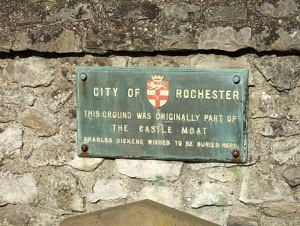
Dickens wanted to be buried in the Castle Moat, but when he died, Queen Victoria wouldn’t allow it and insisted his body be laid to rest in Westminster Abbey. The first, and only time an English monarch has ever over ruled a persons last will and testament.

20121130-073934.jpg

Eastgate House, featured in two of Dickens novels. He obviously found it inspiring as a location.

20121130-073945.jpg

Restoration House, famous in its own right, but now, people come to stare at it because Dickens used it for Miss Haversham’s house in Great Expectations. I don’t know if Dickens ever got to go inside, but I have 😉

20121130-073953.jpg

And finally, Minor Cannons Row, which lies behind the Cathedral. Dickens used it in The Mystery of Edwin Drood.

20121130-074003.jpg

I could have shown you sooooo much more, but this post is turning into 2 posts lol 😉 So now, back to business 😉

20121126-103236.jpg
I’m nominating the following bloggers for the Beautiful Blogger Award
Holly Michael
Bridget Whelan
Florence at Ramblings From The Left
Sabrina at Creativity or Crazy
Sam at Him, Her and Us
Madalyn Morgan
Bel Anderson

20121129-204342.jpg
I’m nominating the following bloggers for the Inspiring Blogger Award
Cheryl at Creating Space 365
Sue at sassyspeaks
Lin at Voices in My Head
Joanne Phillips
Morgen Bailey
Patsy Collins
Sue at The Long & The Short Of It

So on top of all that I’ve also been nominated again for the Blog Of The Year award, this time by Hunter Emkay and Chris Stocking so a huge thank you to both! It appears I now have 8 stars 🙂

Please take a moment to visit some of these wonderful bloggers and I hope you enjoyed the mini tour 🙂 Do you find where you live inspiring?

Professional Editing?


I recently attended a talk by Journalist Susie Steiner (at Faber) who told us that she had used the services of a professional editor to go through her novel before she started to send it out to agents. She urged us to do the same saying that she was confident that it was one of the reasons her novel had ended up in a bidding war between a handful of the top London Agents. She believes that it is a small price to pay to appear professional and serious about publishing your novel. I tend to agree. Why not try to make your novel the best it can be before submitting it to agents and publishers?

So today’s blog guest to continue our editing theme is The Proof Fairy AKA Alison Neale.

20121210-121552.jpg
I’ve known Alison for a few years now (going back to our BookCrossing days!) and have watched her start her own business and build up her clients. Alison has written me a short article which, I think, is very interesting, especially to those of you who are considering going down the Indie route 🙂

A Quick Guide To Editing For Self-Publishing Authors

It seems strange, but only a few years ago it was difficult to become a published author. There were two routes – you were lucky enough to be picked up by a publisher, or you paid a dodgy company to “vanity publish” your book.

Now, of course, it’s different. The introduction of e-readers – especially Amazon’s Kindle – makes it easy for anyone to be an author. All you have to do is write a book, upload it and wait for the sales to roll in, right?

Wrong.

Many self-publishing authors cut corners by missing out the editing and proofreading stage. The result? Thousands of books out there with fantastic plots and characters that make very few sales because they are badly written. If only those authors had employed an editor, it could have been a different story!

Part of the problem is not everyone understands what editing involves. It’s not just about checking the spelling – it goes a lot further than that. In fact, there are three distinct stages of editing:

Content Editing
A content editor will “sanity check” your book by looking for plot holes, inconsistencies and inaccuracies. Many self-publishing authors use “beta readers” for this stage of the editing and that’s probably the best way to go about it. Call on a dozen trusted friends to tell you – honestly – what they think of your book. Take on board their feedback and make the appropriate changes. Your book will be all the better for it!

Copyediting
A copyeditor reads your book line by line looking for spelling and grammatical errors, clunky text and more. A good copyeditor will create a style list that includes particular phrases, character names and locations – for example, whether you use OK or okay – to ensure styles are used consistently throughout. They’ll also raise any queries with you.
In mainstream publishing you’ll normally receive your manuscript back from the copyeditor, make changes and then send it for proofreading – but many copyeditors also proofread as they go along.

Proofreading
A proofreader inspects the final page proofs to check there are no missed typos, the formatting is consistent, page numbers are in sequence etc. However, proofreading can actually happen alongside copyediting, making the process quicker and less expensive. Bear in mind that you need to have your book (or parts of it) proofread every time you make changes, as it’s easy for mistakes to creep in.

Don’t be fooled into thinking editing is something you can do yourself. By the time you’ve planned, written, rewritten and edited your book, you will be so familiar with the plot and the characters you’ll overlook even the most obvious mistakes. For example, I once proofread a novel where a character’s name switched from Tracey to Tracy and back again from chapter to chapter. The author knew what the character was called but just didn’t spot the change in spelling – because he was too close to the book.

There are thousands of self-published books out there and you want to stand out from the crowd. Editing may be an expense you don’t feel you can justify – but when it makes the difference between a handful of sales and a best seller, it’s an expense you shouldn’t avoid.

Alison Neale, AKA The Proof Fairy offers professional proofreading and editing to authors and business owners. Based in Oxfordshire, she reads anything she can get her hands on! She is currently partway through writing her own book, about parenting a child with ADHD. Away from the office she loves football, food and family – not necessarily in that order!

Take a look at some of the books Alison has worked on.

Have you ever used or considered using a professional editor?

Faber Session 13 – Character


Ok, well last nights cake was Lemon Drizzle….mmmmmm 🙂

20121217-223724.jpg

Class was all about character, one of my favourite subjects 😉

A few things that were discussed:

Characters need to be balanced. They need to have positive and negative traits to make them believable.

What’s your characters blind spot? What can’t they see?

It doesn’t matter if you like or dislike a character – you need to understand them, and so does the reader.

Characters need to have a sense of who they are. How is their sense of self constructed? What defines them?

A character must have a past, vulnerabilities and a world view. Push them to their limits!

Someone suggested the Who Are You exercise which is apparently a recognised psychological test. I’ve never heard of it, but, the hubster has agreed to have a go with me at the weekend (I’ll report back lol). What you do is ask someone Who Are You 20 times and they have to respond with a different answer each time. Apparently the first 10 times are usually pretty easy, but after that it can get very difficult to define yourself. This test can be used on your characters 🙂

Have you ever tried the Who Are You Exercise?

The To Do List 17th to 23rd December


I didn’t have a bad week last week, even with the stresses of Christmas fast approaching lol

1. Finish Beta reading BN’s piece. Unfortunately, nope 😦 My reading has sunk to an all time low and I don’t know why.

2. Faber homework. Done!

3. Continue with Nigel Watts book. Still doing!

4. Edit and prepare The Last Word Cafe Synopsis for Thursdays event. Done!

5. Continue making notes on The Last Word Cafe and do a section in 3rd person. Still Doing. I spent a couple of hours last week working on a timeline lol.

6. Go through Faber notes re The Last Word Cafe. Done!

I’m going to be very easy on myself this week (especially as today is the last Faber session until after Christmas) in the run up to 2 weeks off! 🙂 Not 2 weeks off of writing but 2 weeks off from having a list of goals.

20121216-163714.jpg
Look at that clear diary! 😉

1. Continue with Beta Reading BN’s piece.

2. Continue with Nigel Watts book.

That’s it! Lol….I will make some notes on The Last Word Cafe if the mood takes me, but I’m not gunna beat myself up. This week is gunna be busy enough as it is, getting prepped for Christmas!!!! I still have a couple of pressies to buy, and some last minute bits of food. The plan is to be totally done by Saturday so that we can shut ourselves away in the warm until the 27th. Wish me luck!

So what are your plans for the week?

Almost Perfect – Editing Advice From Joanne Phillips


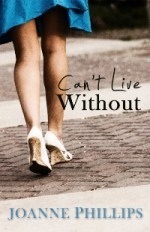
Today’s ‘Editing Advice’ comes from Joanne Phillips who’s blog is excellent for advice and tips on eBook publishing. Back in May Jo published her first book through Kindle, called Can’t Live Without which has an average of 4.9 stars on Amazon and 4.11 stars on Good Reads.

Jo has recently published a selection of short stories, A Life Unpredicted and is currently preparing her 2nd novel for digital publication, The Family Trap.

20121207-072648.jpg
I recently listened to an interview with Pulitzer Prize winning novelist Carole Shields, who said she enjoyed writing poetry because it was possible to get a poem just about perfect. But not a novel. Novels, she said, are too long to get completely right. When Vikki asked me to write a post about editing, this was the first thing that sprung to mind. I think the best place to start is by accepting you will probably never get it absolutely perfect. And go from there.

So, if you’ve just finished Nano and have a good 50,000 words sitting in front of you, or if you’ve some other unpolished, unedited or generally rough draft calling ‘Look at me!’ from your computer, here are my top tips for the editing process – from as-rough-as-they-come to almost-perfect.

1. First, read it in a different form. I like to quickly format my first drafts for Kindle and read them on that, but anything that is different to the form in which you wrote the draft will work. If you have to read it on your computer screen then at least save it as a pdf. This does two things: it enables you to see the story in a different way, and it stops you making changes as you go along. At this stage just read it. Make notes. What do you enjoy? What bores you? Try to go macro not micro – focus on the bigger picture. This is probably the hardest stage: not the hardest work-wise, but the hardest psychologically. You’ll probably think it’s rubbish. If you get any external feedback at this stage you might be put off it for life. But remember, you can’t edit until you have something to work on, and you’ve already put in the time to get this far. No matter what you think, keep going.

2. Plan your first re-write. Next I make up a kind of scene-by-scene list, describing each scene (not chapter) in one sentence. This is a technique I learned from the excellent Roz Morris, whose book Nail Your Novel is full of great editing advice. If you can, get the whole book on one or two sheets of paper. Then get out the red pen and make any structural changes. This is the structural edit, where you might move things around, make a scene from the middle the start of the novel, or cut or add an entire subplot.
20121207-072708.jpg
3. Don’t re-write yet! At this stage I write my blurb. I try to get it perfect. Imagine what will end up on the back of the book, or your pitch to an agent. Once you get it right – and remember you are describing the kind of book you want it to be, not the kind of book it is right now – pin it up where you can see it. It will help keep you focused when you start re-writing.

4. Now I start re-writing, following my new plan, and ironing out any other problems – typos, spelling, inconsistencies etc – along the way. This can take a long time, and depending on the book and the changes you decide to make, can involve two or three more run-throughs of the process above. As you get closer to the overall structure you want, begin another read-through – this time in Word – focusing more closely on the language, atmosphere, setting etc. Really get inside the text, analyse each sentence, make sure every word is the right one for the job. This is the line-by-line edit, and this is the most fun. (I think so, anyway.) J

What can you do if you get stuck? If you read your work and just hate it? Should you give up and start something else, or just keep plugging away? In my opinion, writing – even the hard work of writing, which is what re-writing and editing is – should be fun. If you’re not enjoying it, then maybe put the book aside for a while and start something else. But if you have a contract or a deadline this might not be possible. Then you have to find a way to fall back in love with your book.

Often, once any structural problems have been sorted out, what most people end up with is a sense of flatness. Rarely do people struggle with editing because their novel is too exciting or pacy. Here are some tips for injecting life into a lifeless manuscript:

20121207-072727.jpg
Think contrast. Contrast is good for the reader. Try to make sure you regularly change between settings, viewpoint characters (if multiple viewpoint), fast paced and slow paced sections, dialogue and description. Inject some humour, even in a sad scene, or add a sense of sadness to a funny scene. Contrast characters with each other – give your heroine a friend who acts as counterpoint; make your characters as different from each other as possible. Contrast speech patterns in dialogue.

Surprise yourself. If you think a scene is boring, throw something into the mix. Stuff happens, even during arguments (the electricity suddenly cuts off, the postman knocks at the door, the neighbour’s dog starts going crazy), and it can lead off in a different direction and provide (you guessed it) contrast.

Go with the senses. Everyone says this, but you’re bound to have one or two senses you lean towards in your writing. I’m visual and auditory, but rarely does it occur to me to describe how something smells or tastes. This can add telling detail and bring your work to life.

So, be brave, take a deep breath, and jump right in. Editing does not have to be scary. And it doesn’t have to be perfect. But it will be hard work. And it will definitely be worth it.

Thank you so much Jo! Some great advice there. I hope you all found it as helpful as I did. 🙂

Yes, senses….I am so guilty of not thinking about sound and smell. Which of the senses are you guilty of forgetting?

Faber Session 12 – Conflict and Resolution


Blooming freezing up London Monday night so when I got off the Tube I dashed into the first coffee shop I could see spare seats in, which just happened to be Patisserie Valerie. I had a latte, a tart, and did some writing for an hour….bliss 🙂

20121210-223845.jpg

Ok, on to Monday nights session 🙂

We talked about having conflict in our stories, and the different forms of conflict there are. Internal, external, environmental, you know all this, right? And that posing a question, having a problem for your character to solve can carry the narrative all the way through your novel. That’s what makes up the plot….but what about sub plots?

I’m not sure I really understand sub plots. I mean, the general consensus is that sub plots are hard to pull off in first person…ok, I can kind of get that. And that when they are included in a 3rd person novel, that they feed into the main plot, but are independent to the main narrative.

Hmmmmm, I’m not sure I get it 😦

The only example that I knew that was given was My Fair Lady (Pygmalion) where Eliza’s father is getting married, and that would be a sub plot. Ok, well if that’s the case, my first draft of my WIP (But Not Forgotten) was all sub plot? Lol.

Help me out here guys? How would you define sub plot? Before tonight’s class I would have said it was something along the lines of, say, (sorry Jayne, your WIP was the only example I could think of) 4 women going on a cruise, and 1 of them is escaping an abusive husband. What happens to the other 3 women on board (one discovers she’s pregnant, one meets a bloke etc) are the sub plots, yeah? Or have I got that completely wrong? *groans*

Wow….this is the first lesson I’ve come away from being more confused after than I was before lol. On a lighter note, they have provided us with a rather nice Christmas Tree in our class room 🙂

20121210-225911.jpg

Dealing With Negative Reviews – J. Keller Ford


I’ll do my Faber post tomorrow, because today I have a very special guest 🙂

J. (Jenny) Keller Ford is a quirky mother of four, grand-mother and scribbler of young adult fantasy tales. She has an insatiable appetite for magic, dragons, knights and faeries, and tries to weave at least one into every story she conceives. Her muse follows her everywhere and talks incessantly, feeding her ideas for stories 24/7.

When she’s not torturing her characters mercilessly, J. Keller enjoys living in sunny Florida, listening to smooth jazz, collecting seashells, swimming, bowling, riding roller coasters and reading. Her most loyal fans (beside her family) consist of two Australian Shepherds, a mixed-breed hippy dog, and a precocious orange cat, all of whom believe J. Keller is their slave. She thinks they might be right.

20121210-131043.jpg
Jenny has recently been published in the Make Believe Anthology and today, is talking about…..

20121210-131124.jpg

Dealing With Negative Reviews

Actor Anthony Hopkins once said, “My philosophy is: It’s none of my business what people say of me and think of me. I am what I am and I do what I do. I expect nothing and accept everything. And it makes life so much easier.”

It’s a philosophy that has taken me a little time to realize, but I finally got it.

I think it’s important to understand I’ve always been someone who craved approval. I need it, even now. It must be the Leo in me coming out. I’m a perfectionist. I have to have things certain ways and I need to know I’m appreciated. It’s a part of who I am.

It’s no wonder then that I craved approval when I first started writing. I was actually terrified to throw my work out to the public, frightened by what they would think. Self-doubt and I became great friends, until the day Desire knocked on my back door. Next thing I knew, I joined an online critique site. Talk about a rollercoaster ride. Some critiques gushed with praise. Others seemed to trash everything I wrote. Self-doubt told me to stop. Desire screamed, “Do it again and again! Don’t you dare give up!” I joined other writer sites, other blogs. I met up with some fantastic beta readers who weren’t afraid to show me the flaws in my writing while keeping me motivated and focused.

Then one day this past Spring, it happened. I got my first offer of publication. I was elated. All the hard work, all the dedication, all the long hours of honing the craft of writing finally paid off. A publisher wanted MY story.

The next few months were dedicated to heavy doses of Marketing 101 and I was still riding high on the publishing wave. Then the end of November came and the ARCs (advanced reader copy) went out to various readers and reviewers. A new visitor came to see me: Anticipation, and I found myself wondering once again if ‘they’ were going to like it.

Anthologies are a double-edge sword as they contain a review of the anthology itself, and then individual reviews. MAKE BELIEVE has garnered at least twenty reviews and has phenomenal ratings. I think I can speak for all six authors when I say we’re thrilled to see the anthology so well received.

As for my story, The Amulet of Ormisez? Well, let’s just say it hasn’t been one of the ‘better’ received stories. Everything I tried so hard to do right turned out so wrong. Self-doubt cackled and sat her big rear-end on top of me and wouldn’t move…that is until I got a few virtual smacks along with a few stern words from my beta readers and my daughter. They reminded me that my publisher, who is VERY picky about what they publish, believed in my story enough to publish it. It took my daughter to remind me that a lot of people HATED Harry Potter and many reviewers claimed there were plot holes all over the place. “Ha!” she said. “Do you think Rowling cares what they think?” Another friend reminded me that even Stephen King is not a stranger to bad reviews, but does that stop him from writing? The kicker came when a friend said to me, “Stop caring about what other people think. The only opinion about you that matters is your own.” Something clicked.

So, here I am, a published author and stronger and wiser for the wear. I’ve weathered the ‘review’ storm of my first published piece, and you know what, it wasn’t that bad. Some people loved my story. Some didn’t. That’s okay. My writing isn’t going to appeal to everyone nor should it. As the incomparable Anthony Hopkins said, “It’s none of my business what people say of me and think of me. I am what I am and I do what I do. I expect nothing and accept everything. And it makes life so much easier.”

Amen, Mr. Hopkins. Amen.

Thank you so much Jenny, I really enjoyed that. And like you say, even Stephen King gets bad reviews! Are you dreading that first bad review? Have you had one? How did you deal with it? I seriously think I will cry lol, my critique at Faber was bad enough!

Check out Jenny’s Excellent Blog (I’ve been a follower for a while now) and if you’d like to purchase a copy of Make Believe its available now on Amazon.com and Amazon.co.uk as a download for Kindle. I’ve already added it to my wish list 😉